
The Role of the Hydraulic System in Excavator and Loader Performance
The Role of the Hydraulic System in Excavator and Loader Performance
The hydraulic system is one of the most critical functional components in heavy machinery such as excavators, loaders, graders, bulldozers, and mining equipment. The power, speed, precision, and force transmission capability of these machines all depend on the quality and efficiency of the hydraulic system. In fact, the hydraulic system can truly be called the beating heart of every heavy machine.
In this article, we examine the key role of this system and explain why proper selection, maintenance, and use of it is vitally important.
1. What Is a Hydraulic System and Why Does It Matter in Heavy Machinery?
The hydraulic system operates based on Pascal’s Law — that is, power transmission through oil pressure.
In heavy machinery, this system is responsible for:
- Generating high force to move heavy loads
- Creating precise movement in arms, buckets, and cylinders
- Controlling the speed and power of the machine under demanding conditions
- Increasing operational efficiency and reducing engine strain
Without a hydraulic system, heavy machinery would simply be incapable of performing excavation, loading, or lifting operations.
2. Main Components of the Hydraulic System in Heavy Machinery
The hydraulic system consists of several interconnected parts that work in coordination:
Hydraulic Pump The primary component that sends oil through the circuit at high pressure.
Hydraulic Cylinders (Jacks) Convert force into linear motion. In excavators, they are used for the arm, boom, and bucket.
Hoses and Pipes Transfer oil between components at high pressure.
Valves and Control Valves Responsible for controlling oil flow and pressure.
Oil Reservoir The storage tank for hydraulic oil.
Hydraulic Filters Prevent contaminant particles from entering the system.
3. The Role of the Hydraulic System in Excavator Performance
The excavator is one of the machines most dependent on the hydraulic system. This system directly controls the following:
- Main boom movement
- Arm movement
- Bucket opening and closing
- Cabin rotation (slew)
- Suspension movement in wheeled models
- Operation of attachments such as the hydraulic hammer
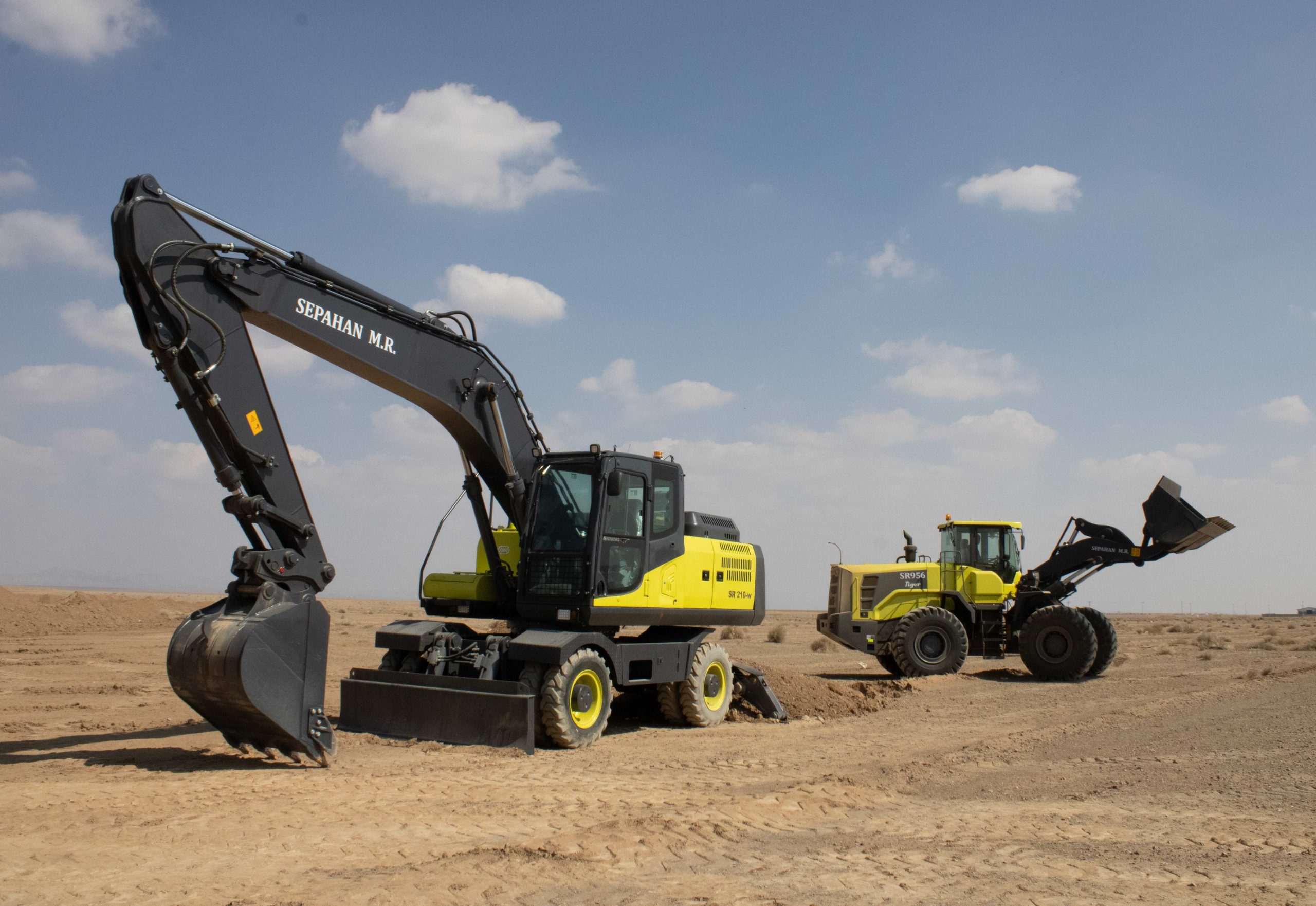
Sepahan excavators such as the SR220-9, SR210-W, and SR160-W utilize powerful and precise hydraulic systems that enhance excavation productivity.
4. The Role of the Hydraulic System in Loaders
In loaders, this system also plays a very important role. The key loader operations carried out by hydraulics include:
- Lifting the bucket
- Discharging the load
- Controlling bucket height and angle
- Precise operation during heavy loading tasks
Sepahan brand loaders such as the SR956 and SR936-H are equipped with fast-response hydraulic systems suited to mining and workshop projects.
5. Advantages of Using Hydraulic Systems in Heavy Machinery
1. Very High Force Generation with Lower Energy Consumption Hydraulics can produce enormous force from relatively low pressure.
2. Smooth Movement and Precise Control The operator can perform accurate and smooth movements with minimal effort.
3. Ability to Work in Harsh Conditions The hydraulic system is resistant to:
- High pressure
- Heat
- Contaminated environments
- Operational impacts
4. Flexibility and Compatibility with Various Attachments Such as hydraulic hammers, rippers, grapples, and drills.
5. Increased Operation Speed and Work Efficiency Fast and coordinated control leads to greater project speed.
6. Common Problems in Hydraulic Systems
If proper maintenance is not carried out, the following problems arise:
- Oil leaks
- Reduced cylinder power
- Oil contamination
- System overheating
- Pump failure
- Slowed machine movements
These issues are typically caused by insufficient greasing, delayed servicing, or the use of non-standard oil.
7. Solutions to Extend Hydraulic System Lifespan
1. Use Standard Hydraulic Oil Oil quality directly affects the lifespan of the pump and cylinders.
2. Periodic Servicing and Filter Replacement The best way to prevent system contamination.
3. Daily Leak Inspection A small leak can lead to a major breakdown.
4. System Bleeding (Air Removal) Air in the system causes power loss, vibration, and component corrosion.
5. Avoid Prolonged Heavy-Duty Operation Allow the system time to cool down.
6. Keep the Hydraulic Circuit Clean Dust and dirt are the hydraulic system’s greatest enemies.
Conclusion
The hydraulic system is one of the most fundamental components of heavy machinery performance. By transmitting power, controlling movements, and enabling operational precision, it is responsible for a major portion of excavator and loader functionality. Proper maintenance of this system can significantly reduce repair costs and extend equipment lifespan. Sepahan Machine Rahyar products, utilizing high-quality and durable hydraulic systems, deliver reliable and efficient performance across a wide range of projects.